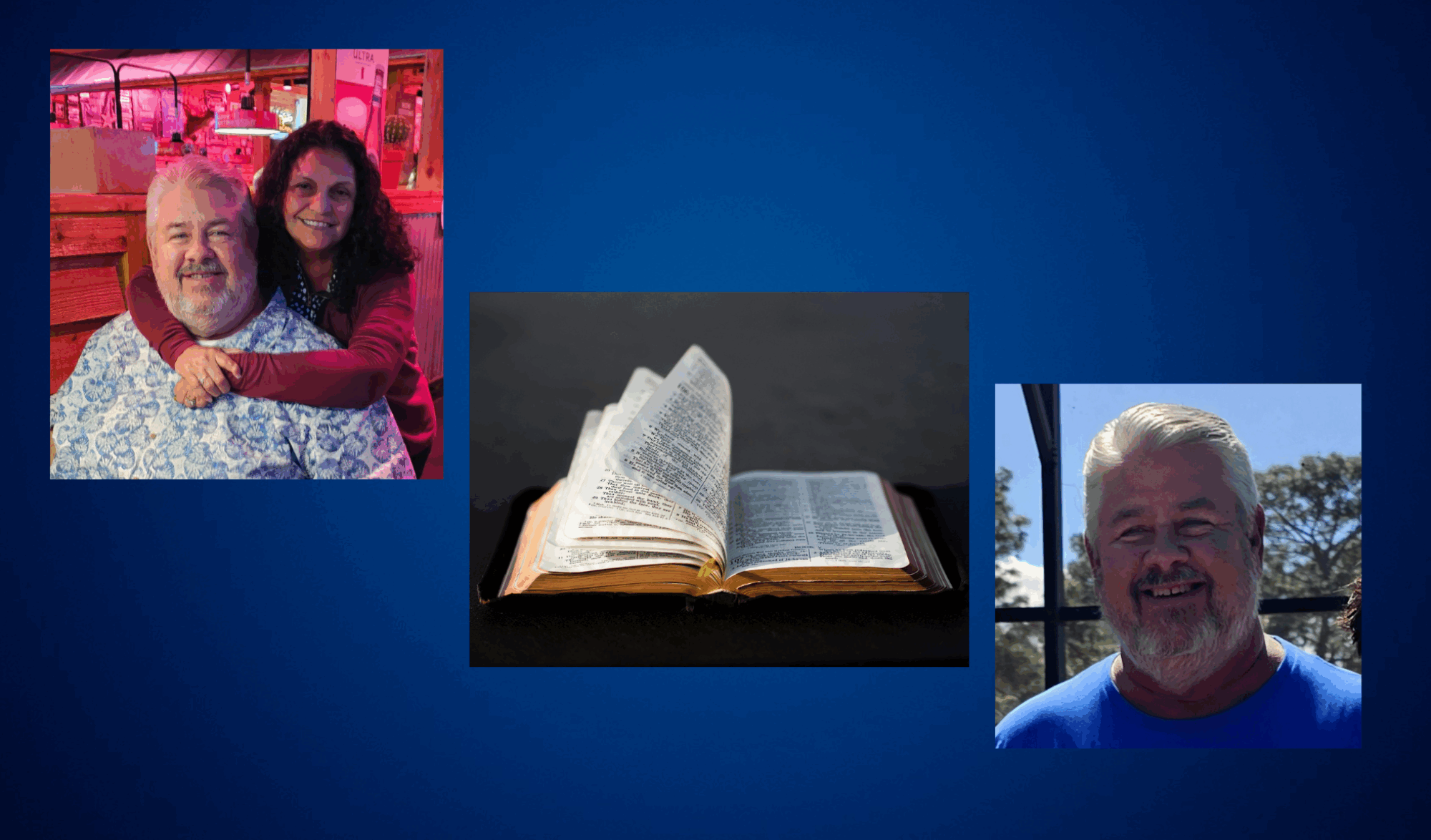
The Three Most Important Tools for Bible Study

From the soon-to-be-released “The Bible Made Clear: How Anyone Can Understand God’s Word” by Pastor Jay McCaig

After two decades of helping believers dive deeper into Scripture, I’ve watched countless Christians get overwhelmed by the sheer number of study aids available today. Walk into any Christian bookstore and you’ll find shelves of commentaries, dictionaries, atlases, and study guides. While many resources have their place, I’ve discovered that effective Bible study really comes down to three essential tools.

Tool #1: The Holy Spirit (Your Primary Guide)

The most essential tool for Bible study isn’t something you can purchase—it’s Someone you already have if you’re a believer. Paul makes this clear in 1 Corinthians 2:14: “But the natural man receiveth not the things of the Spirit of God: for they are foolishness unto him: neither can he know them, because they are spiritually discerned.”

This separates Bible study from merely reading ancient literature. When Jesus promised in John 16:13 that “when he, the Spirit of truth, is come, he will guide you into all truth,” He wasn’t speaking only to the apostles. That same Spirit dwells within every believer today.

Before you open your Bible, take a moment to pray. Ask the Holy Spirit to illuminate God’s Word to your heart and mind. I’ve seen more breakthrough moments happen through simple, heartfelt prayer than through all the study aids combined. The Spirit who inspired Scripture is the same Spirit who can open your understanding today.

Tool #2: A Good Bible with Cross-References (Your Foundation)

While any Bible is better than no Bible, having a reliable translation with cross-references makes an enormous difference. I recommend the King James Version for its accuracy and rich theological heritage.

Cross-references are crucial because Scripture interprets Scripture. The Bible is remarkably consistent, and often the best commentary on a difficult passage is found elsewhere in God’s Word. When you read about God’s covenant with Abraham in Genesis, those cross-references point you to how that same covenant finds fulfillment in Christ throughout the New Testament.

A study Bible with good cross-references becomes like having a built-in concordance. When you encounter a word or concept you don’t understand, those little superscript letters and numbers guide you to related passages that shed light on the meaning. The Scofield Reference Bible or the Thompson Chain Reference Bible are excellent options that have helped countless believers grow in understanding.

Tool #3: A Simple Notebook (Your Personal Commentary)

Never underestimate the power of writing things down. A simple notebook dedicated to your Bible study might be the most underrated tool in Christian growth. When you write something down, you’re forced to slow down and think more carefully about what you’re reading.

Use your notebook to record questions that arise as you read, insights and observations, cross-references you discover on your own, and prayer requests that arise from your reading. You’ll be amazed at how often God brings back something you wrote months earlier at just the right moment.

Why These Three Tools Work Together

These three tools work in beautiful harmony. The Holy Spirit provides the spiritual insight, the Bible with cross-references provides the content and context, and your notebook helps you process and remember what you’re learning.

Notice what’s not on this list: expensive commentary sets, seminary-level theological dictionaries, or complex study software. While these can be helpful, they’re not essential. I’ve seen believers with rooms full of study aids who struggled to understand basic biblical truths, and I’ve seen believers with just these three tools who developed deep, vibrant understanding of Scripture.

Getting Started Today

If you’re just beginning your Bible study journey, start with these three tools. Get a good study Bible, buy a simple notebook, and begin each study time with prayer. Don’t worry about having all the answers or understanding everything immediately.

Remember, the goal isn’t to become a biblical scholar. The goal is to know God better through His Word, to be transformed by renewing your mind, and to grow in grace and knowledge of our Lord Jesus Christ.

So gather these three simple tools, open your Bible, bow your heart, and prepare to be amazed at what the Creator of the universe wants to teach you through His Word. The greatest adventure of your life is waiting between the covers of that Book.


This blog post is adapted from “The Bible Made Clear: How Anyone Can Understand God’s Word,” soon to be released by Pastor Jay McCaig

When the Bible Seems Like It’s Written in Code

Making Sense of the Hard Stuff

And he said unto them, Unto you it is given to know the mysteries of the kingdom of God: but to others in parables, that seeing they might not see, and hearing they might not understand.” – Luke 8:10

Let me tell you something that might surprise you: if you’ve ever scratched your head while reading the Bible and wondered what in the world you just read, you’re in excellent company. Even the Apostle Peter admitted that some of Paul’s writings were “hard to be understood” (2 Peter 3:16). So before you start feeling like you need a seminary degree just to read your morning devotions, take a deep breath and remember that struggling with difficult passages doesn’t make you a second-class Christian – it makes you human.

The Reality Check We All Need

Here’s the truth that every honest Bible student discovers: Scripture contains passages that can make your brain feel like it’s trying to untangle Christmas lights in the dark. I remember early in my ministry, a church member approached me after a sermon on Ezekiel’s vision and said, “Pastor, I’ve been a Christian for forty years, and I still don’t understand those creatures with four faces. Am I missing something?” I told her what I’m telling you now: wrestling with difficult passages isn’t a sign of spiritual immaturity – it’s often a sign that you’re taking Scripture seriously.

The Tools in Your Toolbox

When you encounter a passage that seems impossible to understand, here are some practical steps that have served me well over two decades of ministry:Start with prayer, not Google. Before you grab a dozen commentaries, ask the Holy Spirit to guide your understanding. Jesus promised that “when he, the Spirit of truth, is come, he will guide you into all truth” (John 16:13). The same Spirit who inspired Scripture is available to help you understand it.Context is king. Most difficult verses become clearer when you understand what comes before and after them. It’s amazing how often a puzzling verse gets explained by the surrounding chapter. The Bible isn’t a collection of fortune cookie messages – it’s a unified revelation that interprets itself.

Let Scripture interpret Scripture.

The Bible is its own best commentary. When you find a difficult passage, search for other verses that deal with the same topic. Often, a clearer passage will shed light on a more obscure one. As Isaiah tells us, “For precept must be upon precept, precept upon precept; line upon line, line upon line; here a little, and there a little” (Isaiah 28:10).

Common Types of Difficult Passages

Cultural puzzlers: These made perfect sense to the original readers but leave us confused. Paul’s instructions about head coverings become much clearer when you understand first-century culture.

Prophetic passages: Books like Daniel and Revelation can feel overwhelming. Remember that prophetic literature often uses symbolic language. Focus on the main message rather than getting lost in every symbolic detail.

Apparent contradictions: Before you panic when two passages seem to disagree, remember that the God who “cannot lie” (Titus 1:2) doesn’t contradict Himself. Look for different perspectives on the same truth or different contexts.

Theological mysteries: Some passages deal with concepts that stretch human understanding – the Trinity, divine sovereignty, eternal security. When you encounter these, remember that mystery isn’t the enemy of faith; it’s often the result of a finite mind trying to grasp infinite truth.

When to Wave the White Flag (Temporarily)

Here’s something that might shock you: it’s okay to admit that you don’t understand everything in the Bible. Even after twenty-plus years of study, there are passages that still puzzle me. The goal isn’t to have every verse figured out – it’s to understand enough to know God better and live faithfully.

Sometimes the most spiritual thing you can do is say, “I don’t fully understand this passage, but I trust the God who inspired it.” This isn’t intellectual defeat; it’s humble faith. After all, “the secret things belong unto the Lord our God: but those things which are revealed belong unto us and to our children for ever” (Deuteronomy 29:29).

Practical Steps for the Puzzled

When you hit a biblical brick wall, here’s what I recommend:

Read it again slowly. Sometimes a fresh reading brings clarity.Check the context. Read the whole chapter, maybe the whole book.

Look up key words. A simple word study can often unlock a difficult passage.Consult trusted resources. After you’ve done your own thinking, see what godly scholars have said.

Ask mature believers. Sometimes a pastor or longtime Christian can offer helpful insights.Be patient. Understanding often comes gradually, sometimes over years.

The Ultimate Goal

Remember that the goal of Bible study isn’t to win trivia contests or impress people with theological knowledge. The goal is to know God better and be transformed by His truth. Even when you don’t understand every detail, you can still be changed by what you do understand.

Some of the most spiritually mature people I know have learned to live comfortably with biblical mystery while still pursuing understanding with all their hearts. They’ve discovered that you don’t need to understand everything about God to trust Him completely.

A Word of Encouragement

If you’re feeling overwhelmed by difficult Scripture passages, remember this: God wants you to understand His Word even more than you want to understand it. He’s not playing hide-and-seek with truth. James promises us, “If any of you lack wisdom, let him ask of God, that giveth to all men liberally, and upbraideth not; and it shall be given him” (James 1:5).

The next time you encounter a passage that confuses you, remember: you’re not alone, you’re not less spiritual because of it, and God is faithful to guide those who seek Him with sincere hearts. Keep reading, keep studying, keep praying – and trust that the God who inspired every word is more than able to help you understand what He wants you to know.

After all, He’s been in the business of making the complicated simple for a very long time. Just ask any shepherd who’s ever understood that the Word became flesh, or any fisherman who’s grasped being a fisher of men. God specializes in taking the profound and making it accessible to anyone who approaches His Word with a humble heart.

“The entrance of thy words giveth light; it giveth understanding unto the simple.” – Psalm 119:130

How to Study the Bible with the L.I.G.H.T. Method

How to study the Bible for beginners

One of the most common questions I get as a pastor is this:
“Pastor, how do I study the Bible for myself?”

It’s a good question—and an important one. Because reading the Bible is one thing, but learning how to study it in a way that helps you grow, hear from God, and walk closer with Him…that’s where the real change begins.

Over the years, I’ve tried and taught many Bible study methods. Some are detailed and scholarly, others are simple and devotional. However, I’ve recently developed a method that’s simple enough for beginners, deep enough for seasoned believers, and practical enough for daily use.

It’s called the L.I.G.H.T. Bible Study Method—and I’m proud to say it’s already helping people better understand their Bibles.

Let me walk you through it.

💡 What Does L.I.G.H.T. Stand For?

The name comes from Psalm 119:105:

“Thy word is a lamp unto my feet, and a light unto my path.” (KJV)

Here’s what it looks like:

L – Learn

We begin by reading the passage carefully. What does the Bible actually say? Write down the verse or the key portion that speaks to you.

It’s not about how much you read but how deeply you let it sink in.

I – Interpret

Now that you’ve read it, what does it mean?
Ask good questions: Who’s writing? Who are they talking to? What’s going on? Let the context speak.

This is where you let Scripture interpret Scripture. The Holy Spirit is the best Bible teacher you’ll ever have.

G – Grow

Here’s where we apply it. What do I need to do differently because of what I just read?

James 1:22 says, “Be ye doers of the word, and not hearers only…” The Bible isn’t meant to sit in our heads. It’s meant to shape our hearts and lives.

H – Hear

This is my favorite part. Pause and ask:

“Holy Spirit, what biblical truth are You revealing to me right now?”

This isn’t spooky or mystical. It’s simply being spiritually aware—listening for conviction, encouragement, or direction as you read.

T – Trust

Finally, respond with faith. Write out a simple prayer or a statement of trust.

“Lord, I trust You. Help me walk in what You’ve shown me today.”

This step reminds us that Bible study isn’t a checklist—it’s a conversation with the living God.

🕯️ Why L.I.G.H.T. Matters

We live in dark days, friend. Confusion, compromise, and chaos surround us. Now more than ever, we need the light of God’s Word to guide our feet and guard our hearts.

The L.I.G.H.T. method isn’t complicated. You don’t need a theology degree or a library of commentaries. All you need is your Bible, a quiet moment, and a heart ready to listen.

Whether you’re new to Bible study or seeking a fresh approach, I encourage you to give it a try. Use it in your quiet time, with your family, or in your small group.

Let’s not just read the Bible—let’s walk in the LIGHT.

💬 I’d love to hear from you:

Have you tried the L.I.G.H.T. method yet? What’s God teaching you in His Word lately? Leave a comment or send me a message—I’d be honored to walk this journey with you.

In Christ,
Pastor Jay McCaig
Crossroads Baptist Church